

Máscara de pestañas con tubos vs. máscara de pestañas con fibras: ¿Qué fórmula genera menos quejas por manchas?
Las quejas sobre el rímel rara vez suenan técnicas cuando llegan a una caja de reseñas. Las clientas escriben que el rímel se corrió debajo de los ojos, dejó manchas grises al mediodía, se descascarilló sobre el corrector o dificultó su eliminación más de lo prometido. Para una marca de belleza, todas estas quejas apuntan al mismo punto: la recompra. La elección entre rímel con tubos y rímel con fibras no es simplemente una cuestión de moda. Afecta el comportamiento de la película, las promesas de alargamiento de pestañas, el diseño del cepillo, las instrucciones de eliminación y el tipo de pruebas de uso que se deben realizar antes de que un rímel de marca propia pase de la muestra al producto final.
La disyuntiva entre la máscara de pestañas con tubos y la máscara de pestañas con fibras se vuelve más clara cuando una marca vende a ciudades húmedas, personas con párpados grasos, personas que se desplazan a diario o compradoras que aplican corrector cerca de la línea de las pestañas inferiores. Ambas fórmulas pueden funcionar bien; simplemente fallan de maneras diferentes.
¿Por qué empiezan las quejas sobre manchas antes de que la fórmula toque las pestañas?
La máscara de pestañas ofrece una promesa sencilla al consumidor: cubrir y dar color a las pestañas, añadir longitud o volumen, mantener el rizo y lucir un aspecto impecable en el contorno de los ojos. Sin embargo, el proceso técnico que hay detrás de esta promesa es más complejo. Los agentes filmógenos, generalmente polímeros como copolímeros acrílicos, alcohol polivinílico o látex, crean una capa protectora sobre la superficie de las pestañas. Las versiones resistentes al agua incorporan películas protectoras, ceras, siliconas y protección para el pigmento, de modo que el rizo y el color resistan el sudor y el agua.
Por eso, en las especificaciones de una máscara de pestañas a prueba de manchas, primero se debe definir el tipo de queja. ¿La marca busca reducir la transferencia de grasa debajo de los ojos? ¿El desprendimiento después de varias horas? ¿Manchas negras después de las lágrimas? ¿Pestañas pegajosas después de una segunda capa? Una fórmula puede superar una prueba y aun así generar otro problema. Los sistemas de tubos y de fibras responden a estos riesgos de diferentes maneras.
El emborronamiento, el desprendimiento y la transferencia son fallas diferentes.
El desprendimiento generalmente significa que el pigmento o la película se han ablandado y transferido a la piel. La descamación significa que trozos secos se desprenden de la pestaña. La transferencia suele deberse a la fórmula húmeda, al exceso de producto depositado o al contacto con corrector, sebo, lágrimas y el movimiento de las pestañas inferiores. Agrupar todos estos problemas bajo una misma descripción oculta información útil. Para pedidos al por mayor, el informe de muestras debe diferenciar estos modos de fallo y mostrar fotos después del uso, no solo una foto de las pestañas recién usadas.
Cómo la máscara de pestañas Tubing reduce la transferencia de la piel
La máscara de pestañas con estructura tubular se basa en la idea de envolver cada pestaña con una película flexible. En lugar de comportarse como una capa cerosa tradicional que se ablanda con la grasa, esta película tubular se adhiere a las pestañas hasta que se retira con agua tibia y una ligera presión. Esto reduce el efecto de ojeras que suele aparecer debajo de los ojos. Es especialmente útil para quienes prefieren una máscara que no sea resistente al agua, pero que aun así desea un acabado más limpio para el día a día.
Para marcas que comparan máscara de pestañas tubular En las muestras, la primera comprobación no se limita a si la fórmula forma tubos. La película debe secarse uniformemente, mantener la curvatura en las puntas de las pestañas, evitar la fragilidad y retirarse limpiamente. Si la película es demasiado rígida, pueden aparecer escamas. Si es demasiado blanda, puede dejar marcas en la piel. El aplicador y el cepillo también son importantes, ya que un exceso de producto en la base de las pestañas puede retrasar el secado y aumentar la transferencia antes de que la película se fije.
Las reclamaciones de eliminación necesitan pruebas reales con consumidores.
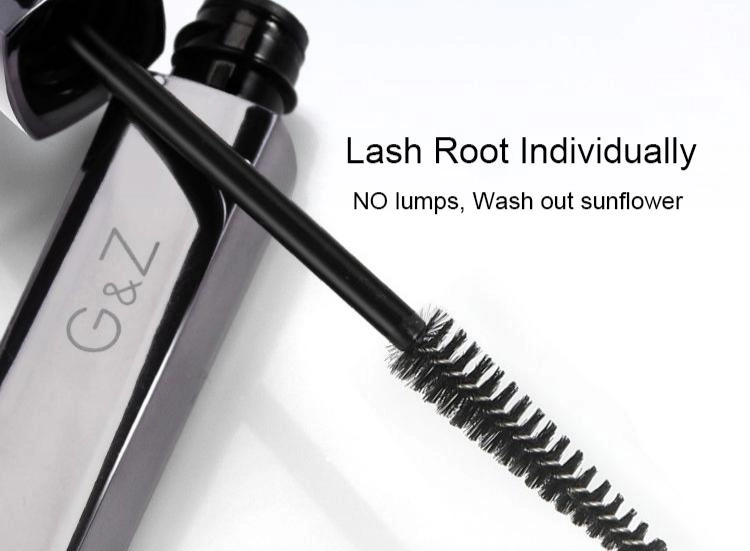
Muchas quejas sobre la máscara de pestañas con tubo se deben a una discrepancia entre la promesa de desmaquillado y su uso real. Algunas compradoras frotan con demasiada fuerza, otras usan primero un limpiador a base de aceite y otras esperan que el agua tibia la desmaquille al instante. Una prueba de marca propia debería incluir el desmaquillado con agua tibia, con un limpiador normal, con un limpiador a base de aceite y la sensación en las pestañas después de desmaquillarla. La fórmula puede ser buena, pero las instrucciones poco claras provocan devoluciones innecesarias.
Donde la máscara de pestañas con fibras sigue siendo la ganadora
La máscara de pestañas con fibras tiene una eficacia diferente. Las fibras finas o los polímeros adhesivos pueden alargar las pestañas, aportando una longitud visible y un acabado más dimensional. Este efecto resulta atractivo porque la diferencia entre el antes y el después es más fácil de fotografiar. L&J Cosmetics ofrece máscaras de pestañas alargadoras con fibras, cepillos de peine densos, cepillos de silicona de doble cara, cepillos curvos en forma de media luna y cepillos espirales compactos. El cepillo no es un adorno; determina si las fibras se distribuyen uniformemente desde la raíz hasta la punta o se acumulan en los extremos de las pestañas.
A máscara de pestañas con fibras El producto debe evaluarse según la adhesión de las fibras, la separación de las pestañas y el comportamiento tras la aplicación de una segunda capa. Si las fibras son demasiado visibles, los clientes podrían confundirlas con polvo. Si la base es demasiado pegajosa, las pestañas pueden apelmazarse. Si el cepillo aplica demasiada fórmula, las pestañas inferiores podrían tocar la piel antes de secarse. Los sistemas de fibras pueden hacer que las pestañas parezcan más largas, pero ese mismo efecto puede generar quejas cuando las fibras se desprenden, se doblan o se acumulan alrededor del ojo.
Las afirmaciones sobre la longitud no deben ocultar el riesgo de aglomeración.
Las fórmulas de volumen pueden volverse pesadas si se aplican en exceso, mientras que los sistemas de alargamiento se basan en fibras o polímeros adhesivos. Este detalle es importante para la redacción de las afirmaciones. Una marca puede prometer longitud visible, separación definida o pestañas más densas, pero la muestra debe demostrar el equilibrio. Las pruebas de cerca en pestañas cortas y escasas son útiles porque es más fácil pasar por alto la formación de grumos en pestañas ya densas.
El diseño de los cepillos y limpiaparabrisas cambia la tasa de quejas.
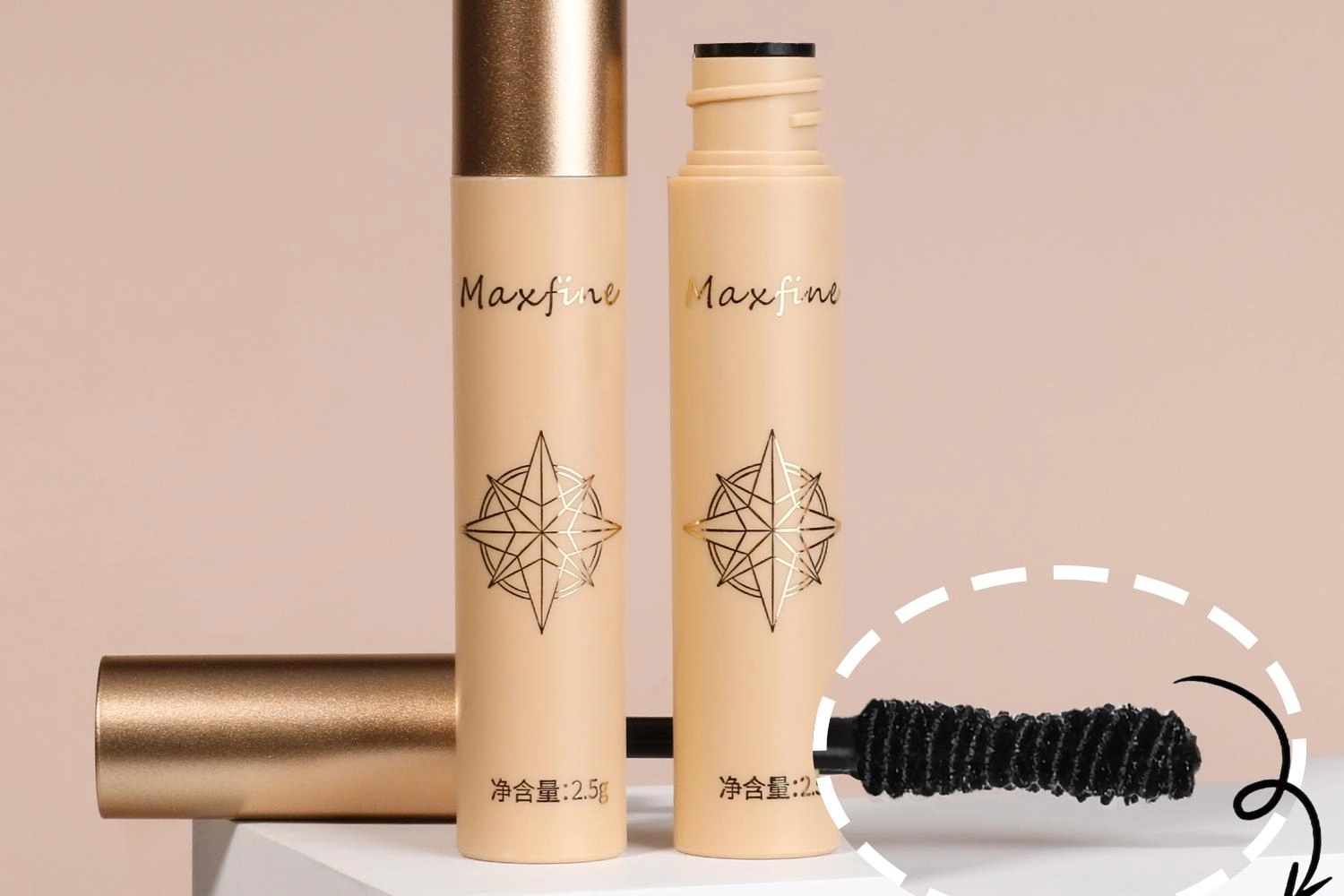
Las quejas sobre manchas suelen comenzar con el aplicador. Un cepillo curvo puede seguir la línea de las pestañas y mantener su rizo natural. Un cepillo cónico aporta volumen a las pestañas escasas. Un mini cepillo llega a las pestañas inferiores y a las comisuras de los ojos. Los cepillos tipo peine ayudan a separar las pestañas y reducen la necesidad de usar un peine aparte. Estas no son decisiones cosméticas menores. Influyen en la cantidad de producto depositado, el tiempo de secado, la separación de las pestañas y el riesgo de marcas en el párpado.
Para un lanzamiento con doble beneficio, 2 inorte 1 ddoble pagpropósito FIber metroáscaris Esto ofrece una dirección útil para el producto, ya que un formato de doble propósito permite separar las necesidades de longitud y peinado. L&J Cosmetics también cuenta con un set de máscara de pestañas BVG 2 en 1 con un cabezal para dar volumen y otro para alargar y rizar, con un cepillo de fibra y una fórmula resistente al agua y a las manchas. Esta propuesta es mucho más atractiva que considerar el cepillo como un componente estándar que se selecciona una vez finalizada la fórmula.
La tolerancia del limpiaparabrisas debe incluirse en el informe de muestra.
Demasiado producto en el cepillo puede hacer que cualquier máscara de pestañas luzca espectacular en la primera foto, pero decepcionante al usarla. Muy poco producto hace que la muestra se sienta seca y débil. Se deben probar conjuntamente la tolerancia del aplicador, la profundidad de las ranuras del cepillo, la separación entre las cerdas y el sellado de la tapa. Una marca debería solicitar al proveedor comentarios después de abrir el producto repetidamente, no solo una revisión de una unidad nueva.
Plan de prueba práctico para máscara de pestañas de marca propia
Un buen plan de prueba debe incluir al menos cuatro momentos de uso: aplicación reciente, secado a los cinco minutos, uso de cuatro a seis horas y desmaquillado al final del día. También debe incluir exposición a la humedad, contacto con aceite cerca de la línea de las pestañas inferiores, frotamiento suave y una prueba con una segunda capa. Las fotos son útiles, pero los comentarios de quien realiza la prueba también son importantes. Sensación pesada, pestañas rígidas, dificultad para desmaquillar y descamación en el corrector: todo esto se convierte en parte del lenguaje que usan las clientas más adelante.
Más adelante en el proceso de abastecimiento, un proyecto de máscara de pestañas de marca propia también requiere controles de empaque y de volumen. L&J Cosmetics se fundó en 2009, cuenta con más de 150 empleados y opera desde una planta de producción de más de 20 000 metros cuadrados. Estos datos son especialmente relevantes cuando una marca necesita muestreo OEM/ODM, verificación de compatibilidad de cepillos y tubos, confirmación del peso del producto y revisión de la consistencia del lote antes de aprobar una gama comercializable.
Seleccione la fórmula según la prioridad de la queja.
Si el principal riesgo es la transferencia de producto al contorno de ojos, la máscara de pestañas con tubos suele ser la opción más limpia. Si el principal atractivo es una longitud espectacular, la máscara con fibras puede ser la mejor alternativa, siempre que estas se mantengan en su lugar. Para un producto de venta al público, una aplicación más suave suele ser preferible a una primera aplicación más impactante. Para un producto de campaña, un crecimiento visible de las pestañas puede justificar un mayor esfuerzo de prueba. L& J Cosméticos Puede brindar apoyo a los compradores en cuanto a la formulación, las opciones de empaque y el análisis de muestras, sin obligar a que cada proyecto se ajuste al mismo formato de máscara de pestañas.
Preguntas frecuentes
P1: ¿La máscara de pestañas con tubos es siempre mejor que la máscara de pestañas con fibras para evitar manchas?
A1: No siempre. La máscara de pestañas con tubo suele reducir la transferencia de grasa porque forma una película alrededor de cada pestaña, pero un tubo quebradizo puede desmoronarse. La máscara de pestañas con fibras también puede funcionar bien cuando las fibras se adhieren correctamente y el cepillo controla la cantidad de producto depositado.
P2: ¿Qué deberían probar primero las marcas al comparar muestras de máscara de pestañas?
A2: Comience con el tiempo de secado, la transferencia debajo de los ojos, la descamación, la fijación del rizo, el comportamiento de la segunda capa, la eliminación y la recogida con brocha después de usos repetidos. La aplicación fresca por sí sola no es suficiente.
P3: ¿Se puede vender la máscara de pestañas con fibras como máscara de pestañas a prueba de manchas?
A3: Sí, si las pruebas de resistencia al desgaste lo confirman. La fórmula debe resistir el sudor, el contacto con aceites, la fricción y la caída de fibras en condiciones de uso diario realistas.
P4: ¿Qué fórmula es mejor para las pestañas inferiores?
A4: Una fórmula con tubo y un cepillo fino o mini suele ser más fácil de aplicar en las pestañas inferiores, ya que limita la transferencia de líquido. La máscara de pestañas con fibras requiere especial cuidado, ya que las fibras sueltas cerca de la línea de las pestañas inferiores son fáciles de notar.
P5: ¿Qué información se debe enviar a un fabricante de máscara de pestañas antes de realizar una muestra?
A5: Comparta la afirmación del objetivo, el tipo de cepillo, el método de eliminación, el nivel de impermeabilidad, el peso del contenido, el estilo del envase, el plan de color, la región de mercado y las quejas exactas que la fórmula debería reducir.