
Multichrome vs Glitter Eyeshadow: Which Finish Gives Brands More Retail Differentiation
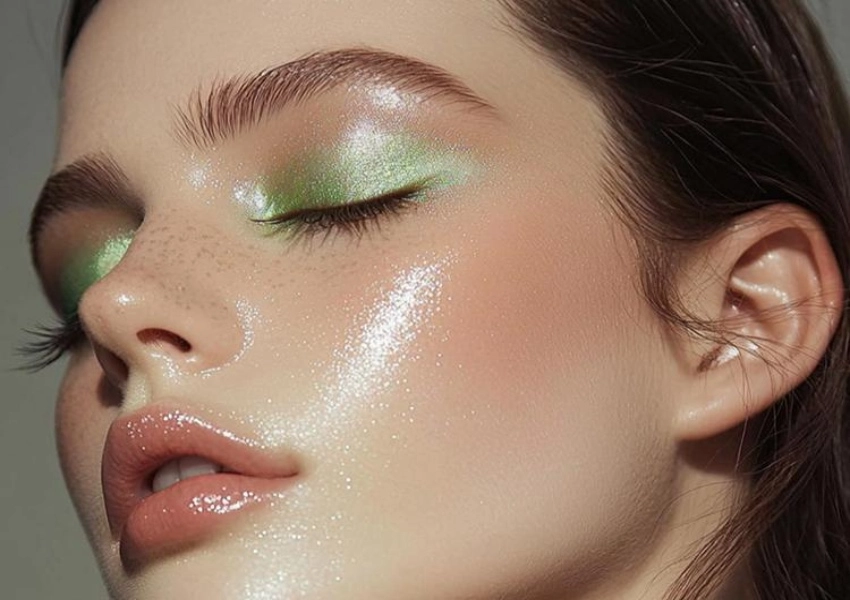
Multichrome and glitter eyeshadow can both stop a shopper, but they create different reasons to buy. Glitter is often read immediately as sparkle and texture. A multichrome eyeshadow can look like one shade at first glance and reveal another color as the lid, light, or camera angle changes. For brands building a differentiated range, the decision is less about which finish is more dramatic and more about which one can be explained, sampled, packed, and replenished consistently.
Separate Color Shift From Surface Sparkle
A glitter finish is usually judged by particle visibility, sparkle density, adherence, and the brightness of the surface. A multichrome finish is judged by the relationship between a base color and a visible shift. That distinction affects shade naming, photography, swatching, and how many products a retailer can place in a display. Two glitter shades may differ mainly in particle color, while two multichrome shades may need a clearer explanation of the color seen from different positions.
Why Multichrome Can Create a Stronger Shelf Story
The commercial appeal of multichrome eyeshadow is the reveal. A shade can move from green to blue, copper to rose, or another defined combination depending on light and viewing position. The shift should still have a recognizable base, otherwise the product may look inconsistent rather than special. For a private label buyer, the sample brief should name the intended base, shift family, payoff level, and acceptable variation instead of asking for a vague ‘color-changing’ effect.
L&J Cosmetics’ multichrome single eye shadow is a precise page match for this type of retail direction. It is presented as a high-shine single eyeshadow with a reflective, color-shifting finish, soft pressed texture, smooth payoff, and luminous shimmer. Those concrete characteristics give a buyer better language for a sample request than a trend label alone.
Where Glitter Still Wins
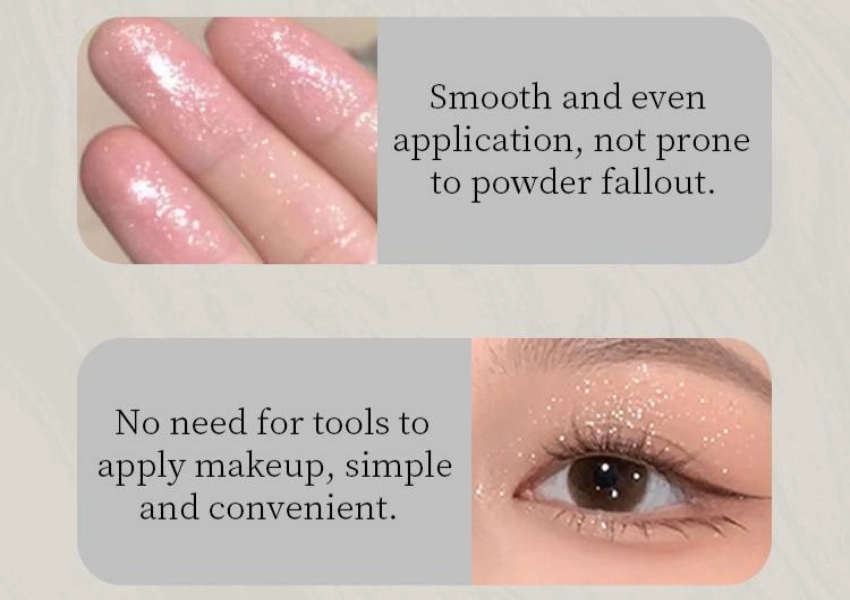
Glitter can be easier to understand at a glance. The payoff is visible in a swatch, the shade name can stay simple, and a stick or liquid format may support quick application. L&J Cosmetics has a glitter eyeshadow with a lightweight texture and built-in stickiness, which points to a different approval conversation from a pressed multichrome powder. Pickup, adhesion, fallout, removal, and the feel around the eye should be reviewed as part of the product promise.
Compare Formula and Application Risk
The finish changes what needs to be tested. Multichrome powders may need checks for press integrity, color payoff, shift visibility, and whether the surface becomes muddy after repeated pickup. Glitter products need close attention to particle distribution, adhesion, fallout, and whether the packaging allows the user to control the amount. Liquid and stick formats add drying, film, tip, and closure questions that do not appear in the same way in a compact powder pan.
Sample Tests That Belong in the Brief
Ask for a physical sample on at least two base intensities and record the result under the brand’s intended lighting and camera use. Check one-finger payoff, brush payoff, buildability, blend edge, fallout after movement, and removal behavior. For a multichrome shade, photograph the base and shift separately rather than relying on one hero image. For glitter, record whether the sparkle remains even after blending and whether particles gather in the crease or at the eye corner.
The eyeshadow collection page is useful for range planning because it places multichrome alongside other eye-shadow directions. A buyer can compare whether the new item fills a real gap between single shades, palettes, liquid sparkle, and stick formats instead of adding another finish with no clear role.
Packaging and Transport Affect the Finish
A differentiated finish loses value if the pack does not protect the sample. Pressed powders need a pan, compact, and closure that limit breakage and surface contamination. Loose or highly mobile particles may need a sifter or inner seal. Sticks and liquids need component compatibility, cap closure, and transport checks so the visual effect reaches the shelf in the same condition approved by the brand.
Make the Retail Image Match the Product
Glitter is often easy to show in a close-up, while multichrome needs a sequence or angle change to communicate the shift. Packaging artwork, shade name, swatch card, and product photography should agree about what the customer will see. A static image that shows only one side of a multichrome shade may create a return problem even when the formula is technically correct. The approval file should include the intended swatch method and the final image direction.
A 16-color eyeshadow palette provides a useful comparison point for assortment architecture. L&J Cosmetics has high color rendering for this palette direction, which is relevant when a brand decides whether a new multichrome or glitter item should be a hero single, a palette accent, or part of a broader finish story.
Choose the Finish By Retail Job
Choose multichrome when the range needs a signature shade, a premium discovery moment, or a finish that can carry social content through visual change. Choose glitter when the brand needs immediate sparkle, a simpler explanation, or a format that works as an accent over matte and shimmer colors. A mixed range can work, but each finish needs its own role, claim language, and sample standard.
L&J Cosmetics has eye makeup formats including single-color and multi-color eyeshadow, liquid eyeshadow, baked eyeshadow, sticks, glitter, shimmer, matte, metallic shimmer, and pearlescent effects. The company was established in 2009, and its knowledge base records more than 150 employees and production space above 20,000 square meters. For a private label launch, that breadth is most useful when the supplier can turn a finish idea into a controlled sample, packaging choice, shade set, and repeatable production brief. L&J Cosmetics is the appropriate broad link for that later conversation.
FAQ
Q1: Is multichrome eyeshadow more differentiated than glitter eyeshadow?
A1: It can be, because the visible shift gives the product a stronger discovery point. Differentiation still depends on a clear base color, repeatable payoff, useful photography, and a retail role that shoppers can understand.
Q2: What should a buyer compare in multichrome samples?
A2: Compare base shade, shift direction, payoff, buildability, texture, fallout, blend edge, photography under planned lighting, and batch-to-batch consistency. Record the approved sample before discussing mass production.
Q3: What makes glitter eyeshadow easier to sell?
A3: Glitter is visually direct. A shopper can usually see the sparkle quickly, but the product still needs a credible story about adhesion, fallout, removal, and application control.
Q4: Can a powder palette and a glitter stick use the same approval standard?
A4: No. Press integrity, pan condition, and pickup matter for powders, while stick payoff, film behavior, tip strength, closure, and transport stability matter for a stick.
Q5: Can L&J Cosmetics develop a custom eyeshadow finish for a private label range?
A5: L&J Cosmetics covers OEM/ODM, formula development, samples, packaging customization, and multiple eye-makeup formats. The exact finish, shade set, component, and production terms should be confirmed in the project brief.