
Ultra-Fine Eyeliner Tips: How to Control Ink Flow Without Drying Out the Pen
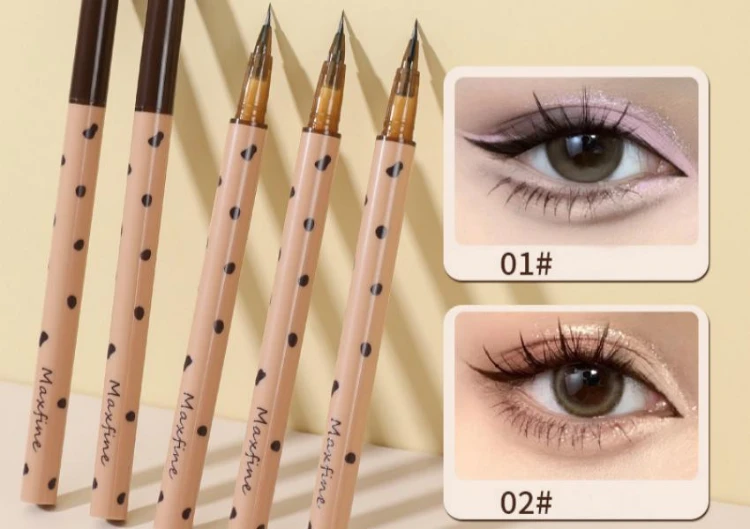
An ultra-thin eyeliner tip is a small part with a large commercial effect. A pen can have a sharp black swatch at filling and still disappoint after a week in a handbag if the tip dries, skips at the beginning, or releases a heavy first drop after shaking. For a private label launch, the key is not to chase the smallest stated tip size. It is to control the path from reservoir to felt or brush, then test that path under ordinary use, storage, and transport.
L&J Cosmetics’ product material lists a Fine Art Smooth Liquid Eyeliner with a 0.01 mm ultra-fine brush tip and a 0.6 ml fill. That is a useful reference for an ultra-thin liquid eyeliner brief, not a blanket performance promise. The same material also includes a colorful gel eyeliner with an arc-shaped tip and sponge applicator, which underlines a basic sourcing point: tip geometry and delivery system have to match the intended line, not just the marketing name.
Set the Ink-Flow Brief Before Selecting the Tip
The term “ultra thin liquid eyeliner” should describe a controlled line at first touch, after a short pause, and near the end of the fill. It should not mean a needle-like tip that only works on a coated card. The initial brief should define the visual result, the target line range, the desired set time, the intended removal method, and the likely climate. If no validated value exists, it belongs on the supplier confirmation list rather than on the retail carton.
Start with the eye makeup when mapping the range. Eye products can be built around color payoff, contour control, shimmer, or long wear, but a pen needs a narrower decision: whether its value is a clean inner-corner line, a flexible wing, or a fuller graphic look. That decision sets the acceptable ink load at the tip.
Capillary Feed Needs a Stable Reservoir
A liquid eyeliner pen normally relies on a reservoir, a feed or wick, and a porous applicator. Ink moves through the system by capillary action and contact pressure. If the reservoir wets the feed too slowly, the line goes pale after a few strokes. If the feed releases too freely, the first stroke can pool and the tip can lose definition. A fine-tip eyeliner, therefore, needs both a formula and a component review; neither can be signed off alone. The same check is central to a private label eyeliner brief.
Ask the factory to identify the refill type, the feed material, the tip material, and the filling orientation. The project knowledge base records liquid pen components with a refill and gives a 0.5 mL liquid side for a double-ended brow format. That is not proof that every eye pen should use the same volume. It is evidence that reservoir design is a defined component decision, so the proposed volume and feed should be confirmed on the exact eyeliner sample.
Choose Tip Material and Shape for the Line Job
Brush, felt, and molded tips behave differently. A brush can give a flexible sweep and a fine taper, but its fibers and assembly need close control. A felt tip can be easier to guide, yet it may show a broader line as the edge wears. A molded tip can be more consistent from unit to unit but must still deliver enough ink to avoid a dry drag. The right choice follows the application motion and the ink viscosity, not a trend-led component photo.
Judge Precision After Repeated Use
A clean first line is not enough. Run continuous strokes, small flicks, pauses between strokes, and a left-to-right versus right-to-left comparison. Check whether the point forks, bends, deposits fibers, or starts to create a squared end. The ultra-thin liquid eyeliner link is a relevant product-level route for the ultra-fine brush concept. Any retail claim about line thickness, however, should be supported by the approved component and test record for that SKU.
Tip forming should also be reviewed with the cap. A rigid cap that rubs the applicator can flatten a delicate point. Too much clearance leaves more headspace for evaporation. Request assembled samples, not only bare tips, and inspect them after repeated capping. A good component may still become an inconsistent pen when the cap seal, barrel tolerance, or inner plug changes.
Balance Fast Set, Water Resistance, and Removal
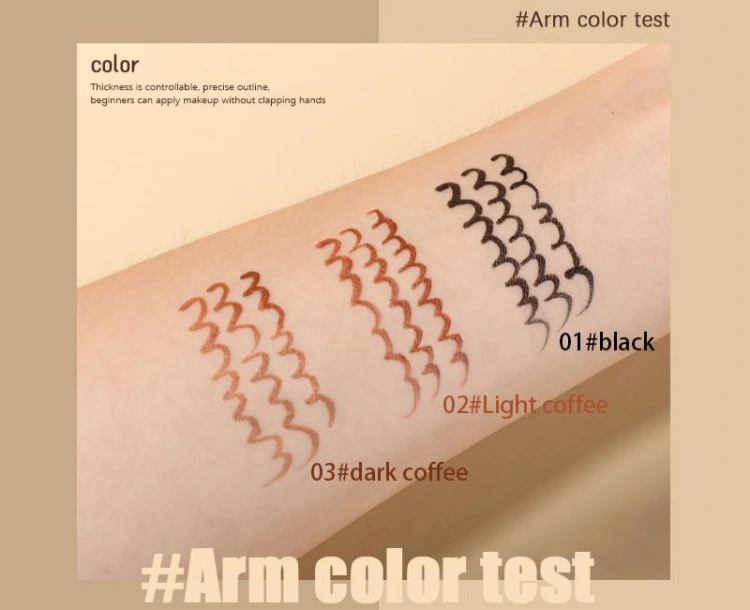
A waterproof eyeliner pen is a balance, not an unconditional guarantee. Film formers can help a line resist water or sweat after it has set, while the overall formula still has to transfer from feed to tip and remove in a way that suits the target customer. A more resistant film may need an oil-based remover or more rubbing. A softer removable film may be less suitable for humid wear.
It has water-resistant and sweat-resistant claims for certain brow and eye formats, and it also records quick-drying films in styling gels. Those references support the need to test set film and smudge behavior. They do not support copying a claim to every formula. For a waterproof liquid eyeliner concept, confirm the test method, application thickness, dry time, and removal conditions with the supplier before releasing copy.
Test on a Curved Surface, Not Only a Card
A card swatch is useful for comparing color and flow, but it does not mimic the eyelid. Add a flexible curved surface or an appropriate cosmetic-use panel to the test plan. Review the first line, a second pass, rubbing after set, water contact after set, and removal with the proposed cleanser. Report the conditions alongside the result. This prevents a vague waterproof claim from becoming a promise with no defined boundary.
Keep Evaporation and Leakage in the Same QC Plan
Drying out is often blamed on the tip when the fault is elsewhere. A poor cap seal, high headspace, a cracked barrel, or an incomplete inner plug can reduce usable ink before the reservoir is empty. At the same time, over-tightening a component can force ink toward the tip during pressure changes. The packing review should examine cap engagement, upright and inverted storage, and shipment orientation rather than treating leakage and dry-out as unrelated complaints.
Build a Batch Check Around Real Failure Modes
For every approved batch, retain samples for start-up flow, continuous line, cap-off recovery, tip appearance, shade, odor, and package integrity. Shake instructions should only be printed if the proposed formula actually benefits from agitation and the test shows a repeatable result. An ink system with settling pigment may need a shake check; a stable system may not.
L&J Cosmetics was founded in 2009, and it has eye makeup, including eyeliner, alongside other color formats. That category breadth is useful later in development when a brand wants the pen, shade naming, carton, and eye-range placement reviewed together.
Before bulk release, compare production samples with the retained approved pen at the same storage point. Ask for the confirmed tip and feed specifications, fill control method, sealing check, and any limits on claim language. A pen that draws a narrow continuous line in its actual package is more valuable than a very fine tip that only works for the first few strokes. The approved record should name the eyeliner manufacturer and the final component revision.
FAQ
Q1: What makes an ultra-thin eyeliner pen skip during use?
A1: Skipping can come from slow reservoir-to-feed transfer, a partially dry tip, pigment settling, unsuitable ink viscosity, or a damaged point. The exact cause should be confirmed on assembled samples.
Q2: Does a fine–tip eyeliner always create a better wing?
A2: No. A very fine tip needs enough controlled ink flow and the right flexibility. If it is too dry, soft, or poorly protected by the cap, precision drops quickly after repeated use.
Q3: What should a private label buyer approve before bulk production?
A3: Approve the formula, tip, feed, reservoir, fill level, cap seal, line-flow checks, water or rub test conditions, removal method, and retained reference sample as one system. A waterproof eyeliner pen also needs its claim limits tied to that record with the eyeliner manufacturer.
Q4: How can buyers reduce eyeliner dry-out during storage and use?
A4: Check cap sealing, barrel fit, headspace, storage orientation, and cap-off recovery on the finished pen. Dry-out control depends on the whole package system, not only the tip.
Q5: Should eyeliner flow be tested after repeated opening and closing?
A5: Yes. Repeated capping can affect tip shape, seal quality, and ink delivery. Buyers should compare line consistency, tip condition, and start-up flow after multiple use cycles before approving bulk production.