
Foundation Shade Range Planning: How Many Undertones Does a Private Label Really Need
A foundation shade range is often planned from a color chart, then forced into a launch calendar. That order causes trouble. A line can look inclusive on paper and still leave shoppers with no believable match because the depth steps are uneven, the neutral options all lean peach, or the deeper shades dry down too warm. For a private label, the first decision is not whether to launch twelve, twenty-four, or forty shades. It is which undertone families the line can support consistently from sample to repeat order.
Range planning also has to respect the format. In the supplied product material, water-based foundation carries powdered pigment in a water and glycerin phase and can need shaking and dispersion checks. Oil-in-water bases tend to feel fresh but can meet sweat and sebum differently, while water-in-oil systems with a silicone outer phase are used for stronger summer wear. The shade map needs to fit that finish, package, and channel.
Start With Range Architecture, Not a Shade Count
The cleanest way to plan a foundation shade range is to build a depth ladder first. Use light, light-medium, medium, medium-deep, deep, and rich depth families as working groups. The names can change later. What matters at sampling is that a visible step separates one shade from the next without leaving a large jump where a customer cannot find a workable match.
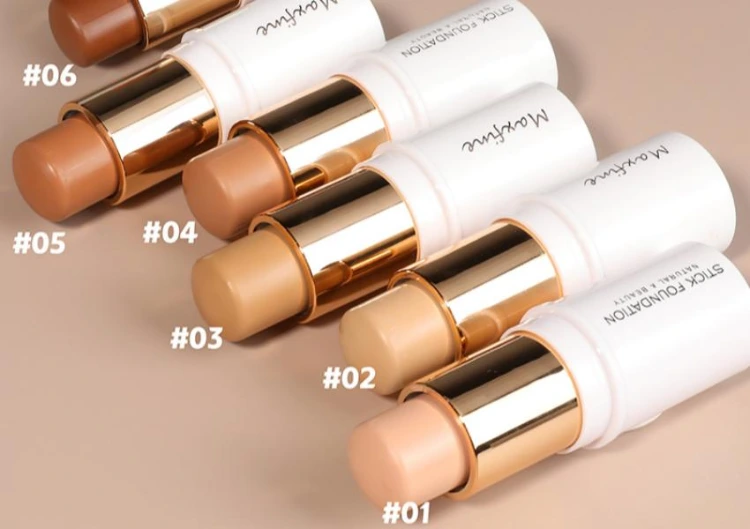
Foundation sticks use less water than liquid or cushion foundation and often move toward a velvety or matte finish. The supplied material also notes that they can feel less suitable for dry skin, while oil-free formulas or oil-control powders can give a fresh, non-greasy direction. That does not decide the shade count. It gives the buyer a reason to keep a stick range separate from a moisturizing liquid line and to test darker shades on their intended finish.
Separate Core Shades From Expansion Shades
Core shades should cover clear depth and undertone combinations with repeat potential. Expansion shades can answer a visible gap, a regional need, or a higher-coverage request. Keeping these groups separate helps with cost and inventory decisions. It also avoids treating every future shade as a launch-day requirement. Add depth or olive only after sample feedback.
Map Undertones Before Adding More Depth
Foundation undertones are not a simple warm-versus-cool label. A yellow-leaning shade, a peach-leaning shade, a rosy shade, and an olive-leaning shade can sit at a similar depth but perform very differently once blended across the face. Treating all neutrals as one beige family is one of the fastest ways to make a range feel less inclusive.
For each depth group, start with the undertone that best fits the target customer profile, then add a second direction where the sample comparison shows a real gap. A neutral should not merely be a warm shade with less yellow. It needs to read balanced next to both warm and cool samples. Olive deserves its own review when the range serves customers who find common golden or rosy bases too orange or pink.
Check Undertones On More Than One Surface
Arm swatches are useful for first sorting, but they do not settle a range. Ask for face-area swatches and dry-down checks under daylight and ordinary indoor light. A color that looks neutral in a laboratory cup can show a strong cast on skin after the volatile phase has settled. The same check matters across light, medium, and deep families because pigment ratios do not stay identical as the shade gets deeper.
Match Coverage And Format To The Shade Strategy
Coverage changes the margin for error. A sheer or light liquid lets some natural skin tone show through, so a small undertone difference may look less severe. A fuller coverage formula makes undertone accuracy more visible because it masks more of the original complexion. That is why a high-coverage line needs careful sample review even when its shade count is modest.
An oil-control liquid foundation can be a useful starting point when a brand is building a more matte or shine-conscious base range. The product direction should not dictate the shade list by itself, though. Sample approvals still need to cover even spread, natural-looking depth, and the point at which the color settles on skin.
L&J Cosmetics’ foundation directions include oil-control liquid, stick, nourishing liquid, creamy matte, twelve-color liquid, and concealer foundation formats. That variety is useful for range planning because a line does not need to force every shade into one finish. A lightweight liquid can carry the everyday core, while a creamier or more covering direction can be reserved for the shades and channel where that payoff is wanted.
A compact foundation stick may suit a tighter range because the format is portable and often selected for targeted coverage or quick application. The project materials describe foundation sticks as smooth and spreadable, with stronger coverage than lighter cushion-style bases. That makes the shade step and undertone choice especially visible. A stick range should be judged after blending, not from the bullet alone.
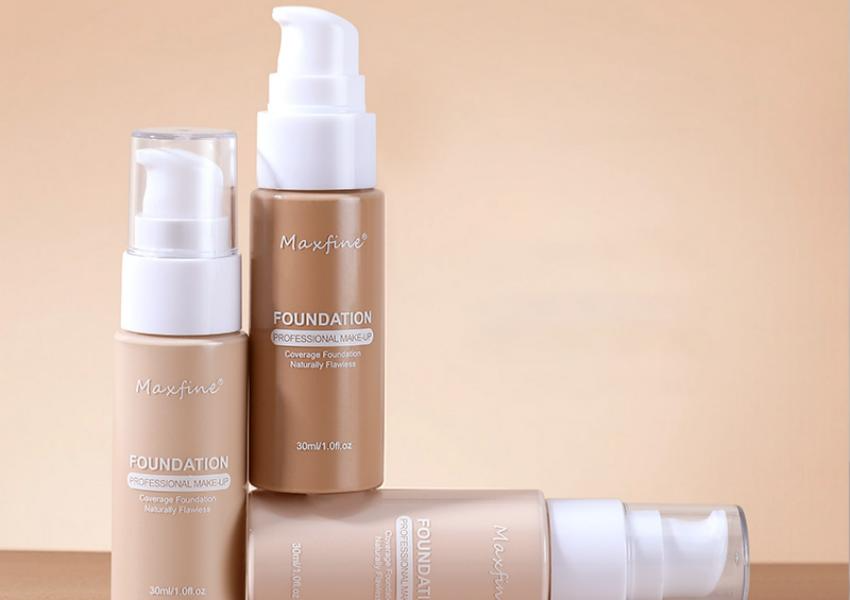
Liquid foundation commonly uses pump bottles or squeeze tubes for controlled application and supports skin-tone evening and minor-imperfection coverage. That gives the range brief a useful packaging boundary: approve the color in the final pump or tube, because dispensing, exposure, and the on-skin result need to agree.
Use A Sampling Grid That Finds Real Gaps
A sample grid is more useful than an attractive shade fan. Arrange samples by depth on one axis and undertone on the other. Mark the intended finish, coverage level, and package for each sample. Then look at the range in rows and columns. Two adjacent shades that disappear into each other are a weak use of an SKU. A missing medium-deep neutral or deep olive direction may be a more valuable addition than another light-beige.
The grid should also record what has been approved and what remains conditional. Ask the supplier to keep retained samples and bulk references under the same shade code. Liquid foundation in pump bottles or squeeze tubes has its own packaging and dispersion checks. The project knowledge base also notes that water-based systems can need shaking and settling review. Those practical details belong in the approval record, not in a vague request for a color that looks close enough.
Foundation color behavior is also tied to the film and pigment system, not only to the shade name. The industry reference describes trimethylsiloxysilicate as a film-forming ingredient that can resist moisture, sebum, and friction when used in a suitable system. That does not make any foundation an automatic long-wear product. It means a brand should test the exact shade and finish after dry-down, oil contact, and use in the final pack before writing a wear claim.
Keep Approval Context Consistent
Pigment treatment is part of the approval context. The industry reference identifies alkylsilane, ITT, hydrogenated lecithin, amino acid, and silicone-elastomer treatments as factors that can affect dispersion, oil absorption, skin adhesion, coverage, oil control, and stability. That is why the same lighting, application amount, dry-down time, and comparison background should be used for every revision. For deeper shades, keep the review just as strict and keep undertone choices believable at that depth.
Turn The Map Into A Private Label Brief
A good private label foundation brief lists the target shade families, priority undertones, coverage, finish, package direction, and the order in which samples should be approved. It should also state where a substitute is acceptable and where it is not. For example, a slight adjustment within two neighboring light warm shades may be manageable, while replacing a planned deep neutral with a warm red-leaning alternative changes the range logic.
The foundation collection gives a practical category bridge when comparing liquid and stick directions before the brief is locked. Later in the process, L&J Cosmetics can support OEM/ODM discussions around color matching, packaging, printing, and sample review. L&J Cosmetics has operated in color cosmetics since 2009 and works across face, eye, lip, nail, and remover categories. That broader production context matters when the foundation range needs to sit beside concealer, powder, or blush rather than launch as a single product.
The final decision should come from samples, not a fashionable shade count. Build a clear core, protect meaningful undertone gaps, and leave room for controlled expansion.
FAQ
Q1: How many shades should a private label foundation launch include?
A1: Start with the depth and undertone combinations the target market needs. A well-spaced range is stronger than a larger launch full of near-duplicate beige shades.
Q2: Are neutral shades enough for an inclusive foundation range?
A2: No. Neutral does not replace warm, cool, rosy, yellow, or olive directions. Samples should show where it fills a real gap rather than overlaps another shade.
Q3: What should a custom foundation manufacturer receive before sampling starts?
A3: Provide a shade map, depth and undertone targets, coverage, finish, pack preference, reference samples, and approval checks for dry-down and batch comparison.
Q4: Should the same undertone appear at every depth?
A4: Not automatically. Add an undertone where it fills a credible market gap, then check its behavior in the chosen formula and coverage level.
Q5: When should a brand add expansion shades?
A5: Add them after core samples are approved and feedback identifies a real gap. Retain the same dry-down, lighting, and package checks used for the initial range.