
Why Foundation Shades Oxidize and How Brands Can Test Color Stability Before Launch
Foundation oxidation is one of those complaints that sounds simple until a brand has to solve it. A shopper applies a shade that looks right at 9 a.m. By noon it has turned warmer, deeper, grayer, or slightly orange. The formula may still feel smooth. Coverage may still look good. Yet the shade no longer matches the promise on the carton, and that is enough to create returns, bad reviews, and nervous distributors.
For brands developing private label foundation, color approval cannot stop at a fresh pump swatch. Foundation color stability has to be tested after dry-down, on oily skin, under heat, inside the final bottle or stick, and across the full shade range. The issue is rarely one ingredient by itself. It is usually the way pigment surface treatment, oils, pH, water content, film formers, and packaging interact over time.
What Foundation Oxidation Really Looks Like
“Oxidation” is often used as a catch-all word for any shade change. In practice, the complaint may come from several different behaviors. Some formulas dry down darker as volatile ingredients leave the film. Some pigments shift warmer after contact with skin oil. Some shades look stable in a glass beaker but change after sitting inside a pump, tube, or stick package. Others look good in daylight but turn dull under warm LED retail lighting.
That is why the first step in foundation shade testing is to name the change clearly. Does the shade darken, yellow, orange, or gray, lose brightness, separate, or create a ring at the swatch edge? A lab cannot fix a vague complaint. A buyer can help by sending fresh swatch photos, 30-minute photos, 4-hour wear photos, and notes on skin type and environment.
Dry-Down Is Not Always A Defect
A shade may deepen slightly as water or volatile silicone leaves the film. That can be normal if the change was allowed for during shade matching. The problem begins when the dry-down jump is too large or inconsistent across shades. A deep shade should not shift more red while a light shade turns pink. The full range must be tested as a family, not one hero color at a time.
Pigments, Oils, And pH Create The Main Risk Zone
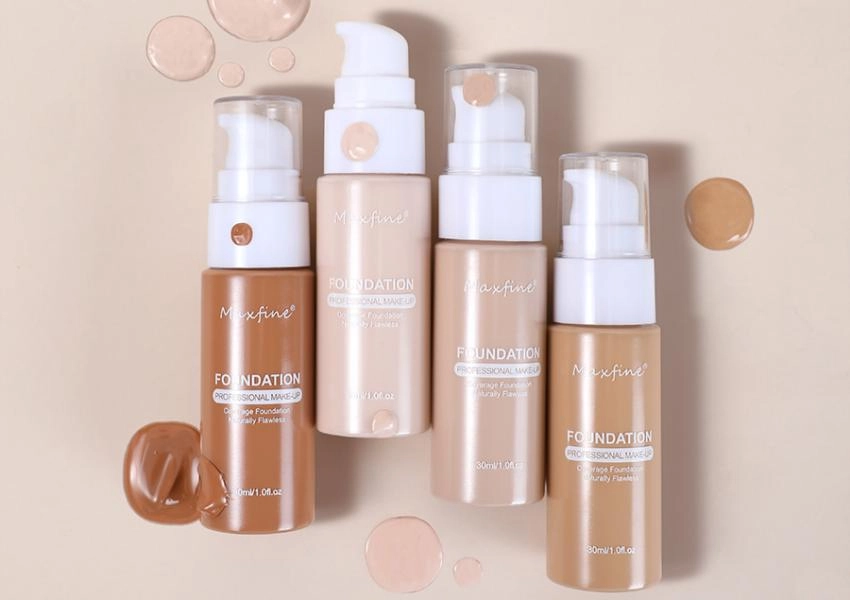
Liquid foundation is usually built from pigments, powders, water or oil phases, emulsifiers, film formers, and skin-feel ingredients. For L&J Cosmetics’ liquid foundation work, the base makeup goal is practical: modify skin tone, cover minor imperfections, and use pump bottles or squeeze tubes for cleaner application. That product goal only works if the color stays believable after contact with skin.
Water-based foundation can suspend powdered pigment in water and glycerin. That gives a lighter feel, but powders may settle when the product stands, so shaking behavior and dispersion stability matter. Emulsion foundations disperse pigments in creams or emulsions. O/W systems can feel fresh but may mix more easily with sweat and sebum, while W/O systems, especially with silicone as the outer phase, tend to hold better in summer wear.
Pigment Surface Treatment Changes Wear Behavior
Pigment coating is a major reason one formula oxidizes faster than another. Alkylsilane-treated pigments can improve wetting in synthetic esters, mineral oils, and silicone oils, allowing higher pigment loading and better stability in foundation and eyeshadow systems. ITT-treated pigments reduce oil absorption and support high-coverage, low-viscosity base makeup. Hydrogenated lecithin can improve skin compatibility and oil dispersion, though lecithin itself needs care because of oxidation and odor risks. These choices sound technical, but they decide whether a shade sits cleanly or shifts after hours on skin.
The Film Former Can Help Or Hurt Color Stability
A film former affects how the foundation dries, resists sebum, and holds pigment in place. Trimethylsiloxysilicate is useful in long-wear foundation because it forms a dense hydrophobic and oleophobic film. It can block moisture and sebum penetration, improve friction resistance, and help color retention for 8 to 12 hours. For oil-control lines, that kind of film can reduce shade movement caused by skin oil.
Still, film strength has to be balanced. Too much film can make a product feel tight or crack around textured areas. Too little film can leave pigments exposed to oil and sweat. The liquid foundation oil control is a suitable reference point for brands looking at matte wear and oil-control positioning, but the lab still needs to test the exact shade system, fragrance load, preservative system, and package before launch.
Sebum Testing Should Be Built Into Approval
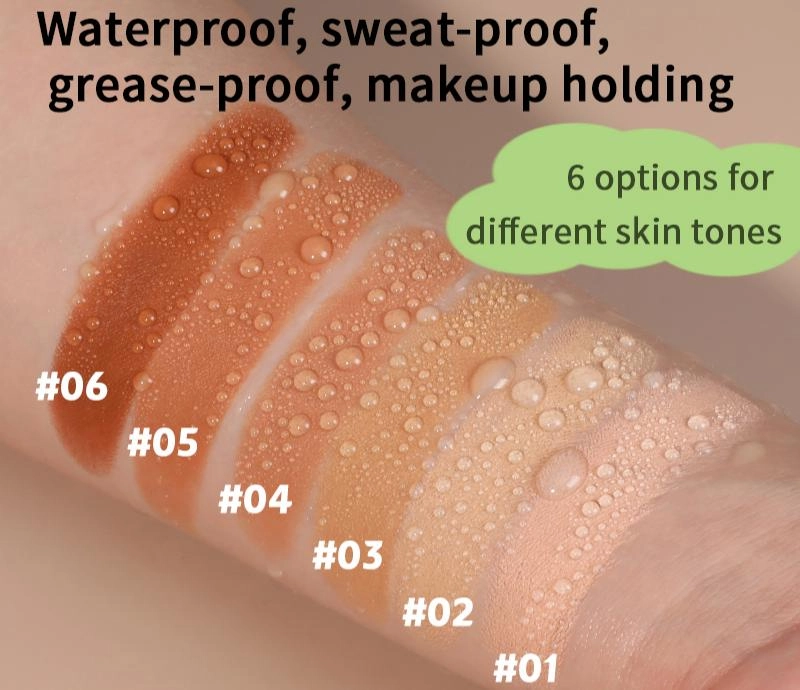
A simple arm swatch is clean, but it does not behave like a forehead or nose area after four hours. Add artificial sebum or a controlled oil contact test to the shade approval process. Then compare a clean swatch, a sebum-contact swatch, and a worn skin swatch. If the oil-contact sample becomes notably warmer, the pigment treatment or oil phase may need adjustment.
Packaging Compatibility Is Part Of Shade Testing
Foundation is not approved until it has sat inside the final package. Pumps, squeeze tubes, droppers, caps, inner gaskets, and stick mechanisms can all change user experience. Packaging should have sealing and protection that maintain product quality and hygiene. It also has to deliver a stable dose. If the first pump is oil-rich and the fifth pump is pigment-rich, the customer will see different colors from the same bottle.
For stick formats, the risk changes. L&J Cosmetics foundation stick material focuses on smooth spreadability, buildable coverage, portability, and long wear. A stick may use less water than a liquid foundation and may rely more on waxes, oils, and powders. That can make it practical for targeted coverage, but it still needs heat stability, sweat contact testing, bullet strength checks, and shade rub-off checks. A foundation stick can be a smart travel or touch-up product, yet its stability test should not be copied from a liquid formula without changes.
Test The Final Fill, Not Only The Lab Cup
Run a packaging compatibility test with the actual bottle, pump, tube, or stick case. Store samples upright, upside down, and on their side. Check room temperature, heat, cool storage, and light exposure. Measure shade at fill, after 24 hours, after one week, and after accelerated aging. The goal is not to make the formula look perfect in a lab cup. The goal is to find what a customer will actually use.
A Practical Pre-Launch Testing Plan For Brands
A liquid foundation manufacturer should give brands a test plan that matches the claim. A natural finish line does not need the same stress test as a 12-hour oil-control line. A high-coverage matte range needs stronger checks for pigment dispersion, oil control, transfer, pore settling, and shade jump. A moisturizing range needs more checks for emulsion stability, separation, and warm storage.
A useful plan includes fresh color reading, dry-down reading, 4-hour and 8-hour wear checks, artificial sebum contact, pH drift, freeze-thaw or heat-cool cycling, centrifuge or separation checks, package compatibility, and final batch comparison. For foundation formulas sold in many shades, test light, medium, tan, and deep families separately. Darker shades often have different pigment ratios and may reveal oxidation risks that a light beige sample hides.
L&J Cosmetics can be introduced naturally at this stage of the project. The company works across face makeup, eye makeup, lip makeup, nails, brow products, and cleansers, with OEM/ODM support and a factory scale suitable for custom color cosmetics. A brand can use the face makeup category to review base makeup direction, compare foundation formulas for liquid options, and discuss color matching, packaging, printing, and sample approvals before bulk production.
FAQ
Q1: What is the fastest way to spot foundation oxidation during sampling?
A1: Compare a fresh swatch with 30-minute, 4-hour, and 8-hour swatches under the same light. Add an oil-contact swatch to see whether sebum is pushing the shade warmer or darker.
Q2: Does every foundation shade oxidize?
A2: No. Some formulas only dry down slightly, while others shift because of pigment treatment, oil phase, pH drift, sebum contact, or packaging interaction. Each shade family should be tested separately.
Q3: Why can one shade in a range oxidize more than another?
A3: Shade depth changes pigment ratios. A tan or deep shade may use more iron oxides or different treated pigments so it can react differently from a light ivory sample.
Q4: Should private label foundation be tested in the final package?
A4: Yes. Pumps, tubes, droppers, and stick cases can affect dispensing, air exposure, separation, and first-use color. Final packaging should be part of color stability approval.
Q5: Can L&J Cosmetics help with foundation shade matching and packaging choices?
A5: L&J Cosmetics supports OEM/ODM color cosmetics work, including face makeup projects, custom shade discussions, packaging options, printing, and sample checks before bulk production.